Mambas of Africa: species, behavior, venom, and risk
Each continent has their respective legendary snake surrounded by myth and fear. Australia has the taipans, Asia the king cobras, North America the rattlesnakes and South America the fer-de-lance. Make mention of Africa in relation to snakes and the mambas will be at the forefront of discussion, with a dose of added sensationalism.
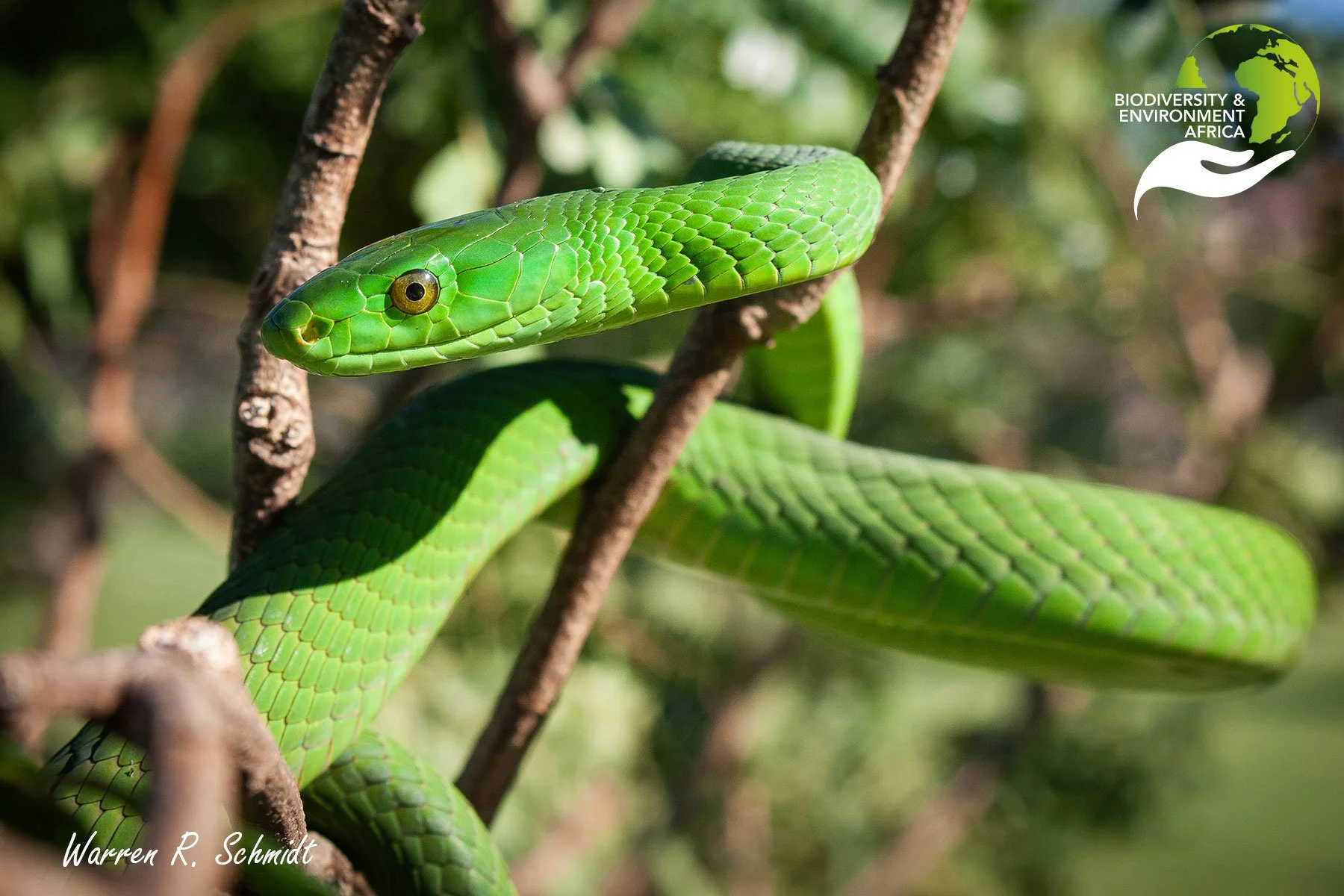
Eastern Green Mamba.
How many mamba species are found in Africa?
Four species of mamba are found on the African continent. Their taxonomic history was for a long time greatly confused, especially with respect to the Black Mamba and Eastern Green Mamba —which were for a long time considered one and the same species!
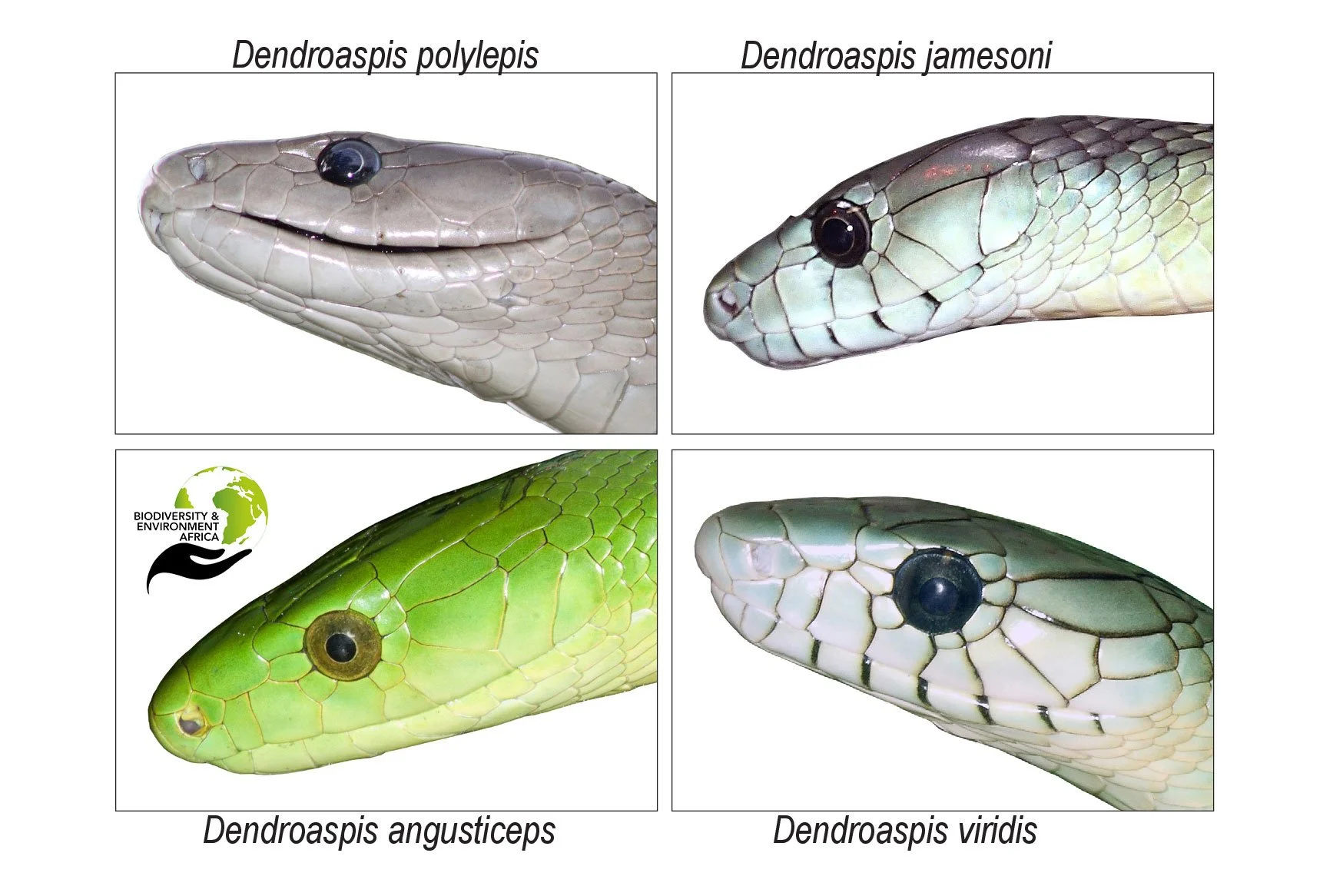
Close-up detail of mamba heads.
The Black Mamba (Dendroaspis polylepis)
The Black Mamba (Dendroaspis polylepis) is the most widely distributed species and is found across the African savanna biome. They are more abundant at lower altitudes. Their range covers eastern South Africa and Eswatini, north across Mozambique, Malawi, Zambia and Angola and into East Africa, as well as a wide belt across from South Sudan westward to Senegal.
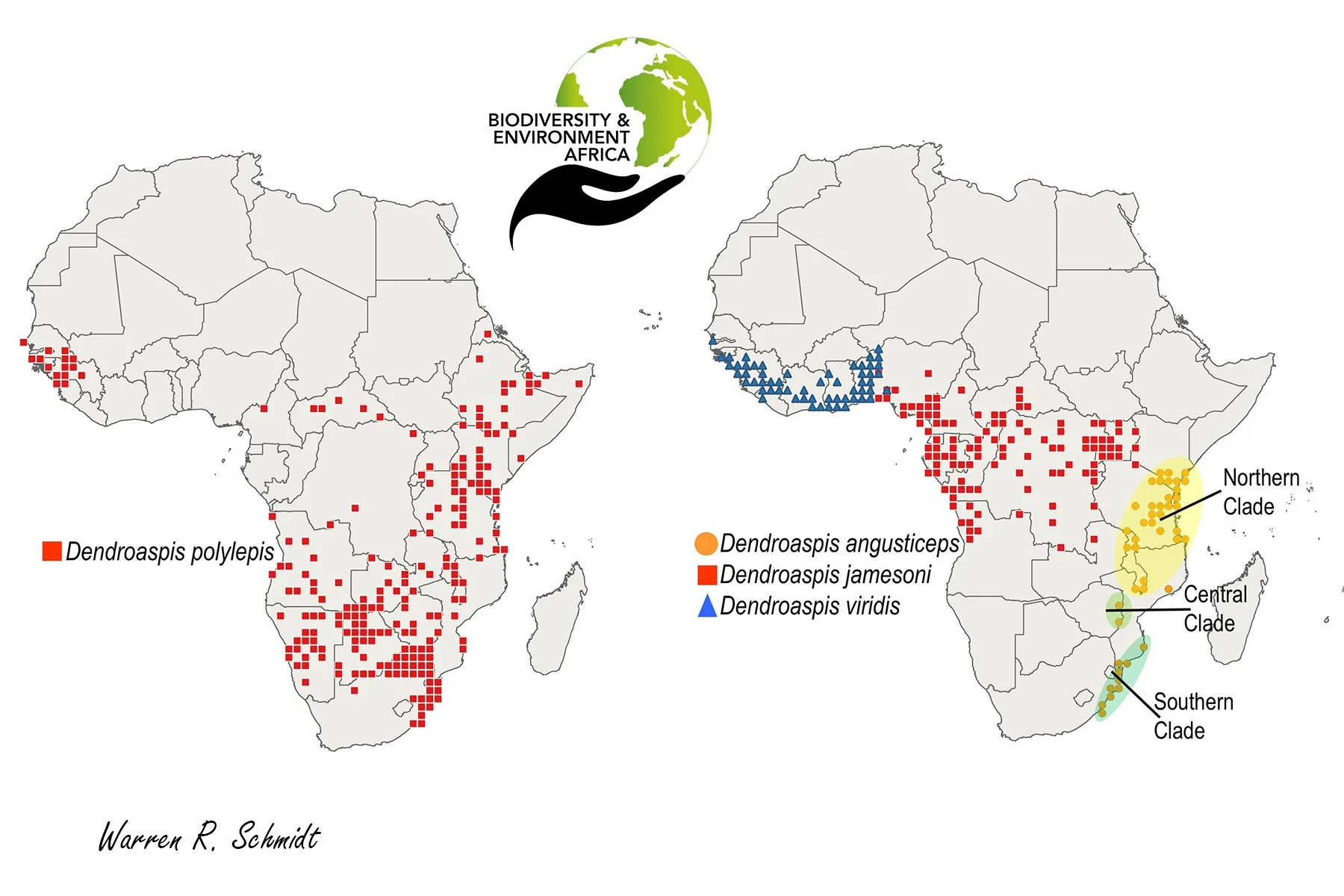
Distribution of mambas in Africa.
Black Mambas in peri-urban environments
In some peri-urban regions they are surprisingly common, such as in and around Durban in KwaZulu-Natal, South Africa. The abundance of man-made cover, in addition to prolific prey in the form of rats and small cats, has ensured the success of this snake. Yet, despite being common, snakebites on the large human population surrounding Durban are surprisingly rare, testament to the willingness of these snakes to flee and avoid human conflict when given the chance.
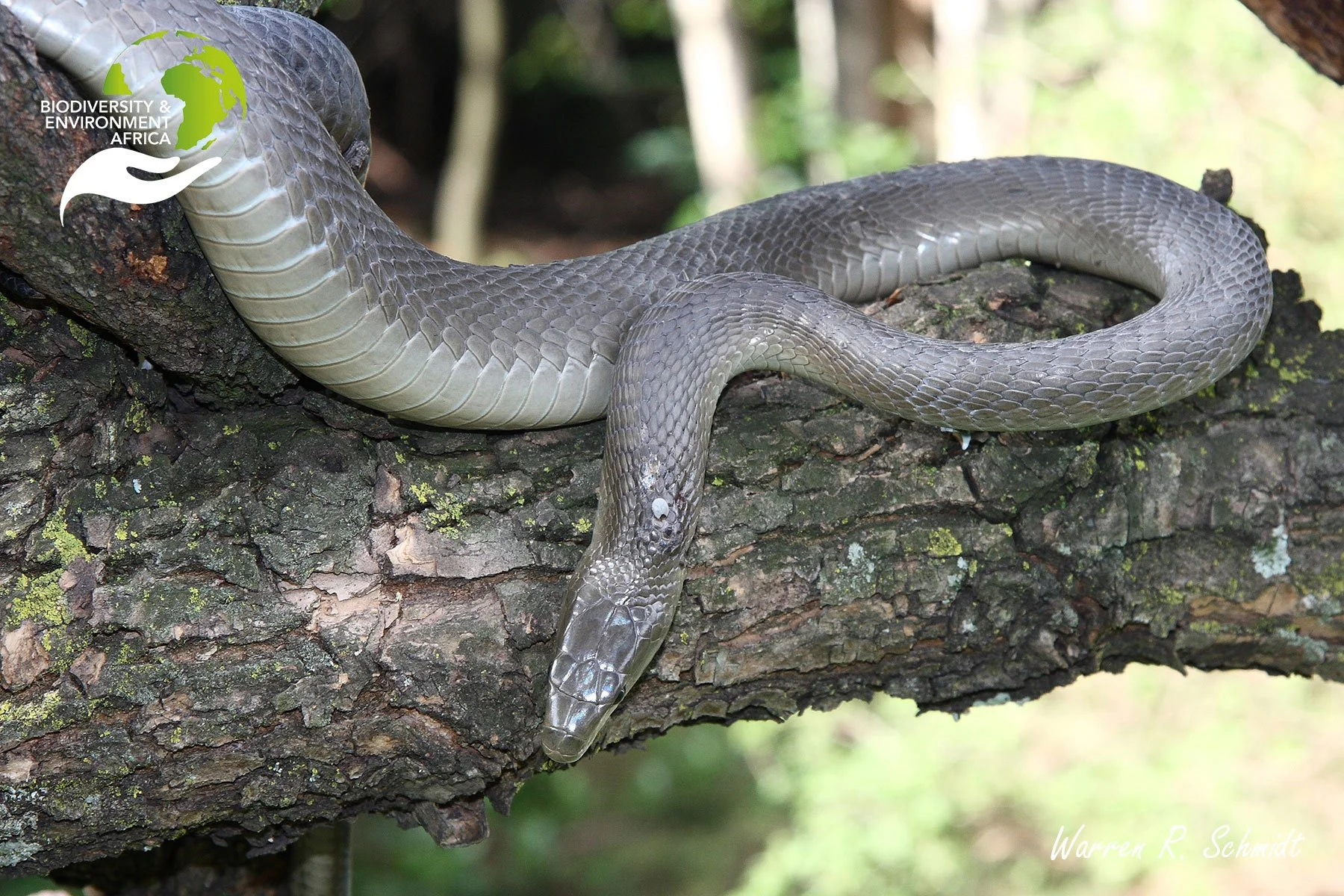
Black Mamba.
Green Mambas of Africa: arboreal species overview
The remaining three species are all green arboreal (tree-living) mambas.
Eastern Green Mamba (Dendroaspis angusticeps) - distribution and genetic insights
The Eastern Green Mamba (Dendroaspis angusticeps) is found from the Eastern Cape/KwaZulu-Natal border extending north-east into Mozambique, Tanzania and Kenya, and inland to eastern Zimbabwe and Malawi. However, genetic studies have demonstrated three distinct clades – a southern clade restricted to South Africa and likely southern Mozambique, a central clade in eastern Zimbabwe and a northern clade north of the Zambezi River (northern Mozambique, Tanzania and Kenya). Further work is required to establish if these clades warrant taxonomic recognition, which is probable if further supported by morphological (scalation) and osteological differences.
Jameson’s Mamba (Dendroaspis jamesoni)
Jameson’s Mamba (Dendroaspis jamesoni) is a species of the central African forests, extending from Nigeria eastward into western Kenya, Uganda and Tanzania.
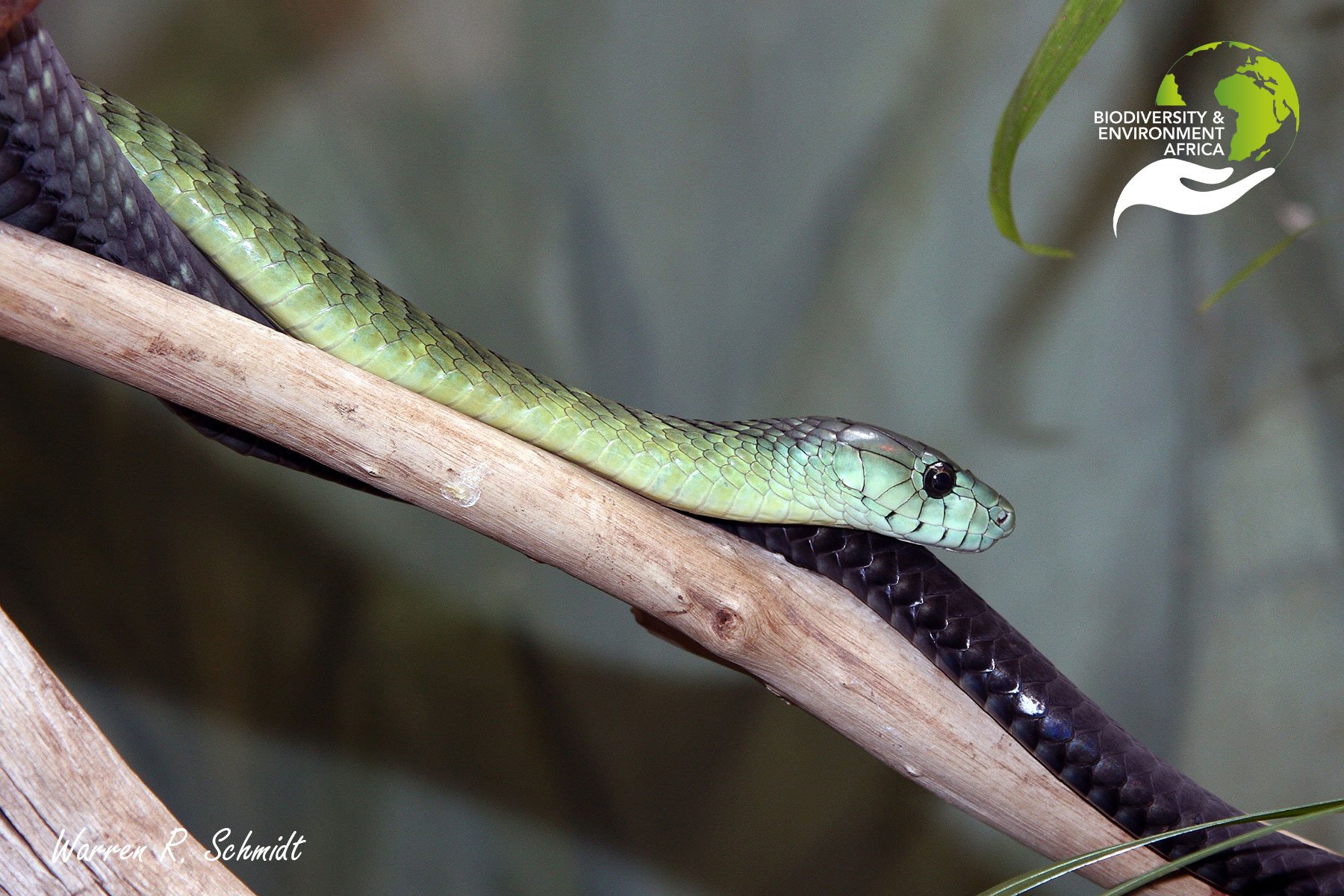
Jameson’s Mamba.
The eastern population with distinctive black tails are considered a subspecies – Dendroaspis jamesoni kaimosae, but a recent study published in 2025 using four genetic markers found no significant genetic variation between the central and eastern populations.
Western Green Mamba (Dendroaspis viridis)
The Western Green Mamba (Dendroaspis viridis) is found in West Africa from Senegal to Togo. The identification of snakes from around western Nigeria, Benin and Togo need verification, as online databases show Jameson’s Mamba as occurring here…and sometimes Western Green Mambas in Nigeria and Cameroon.
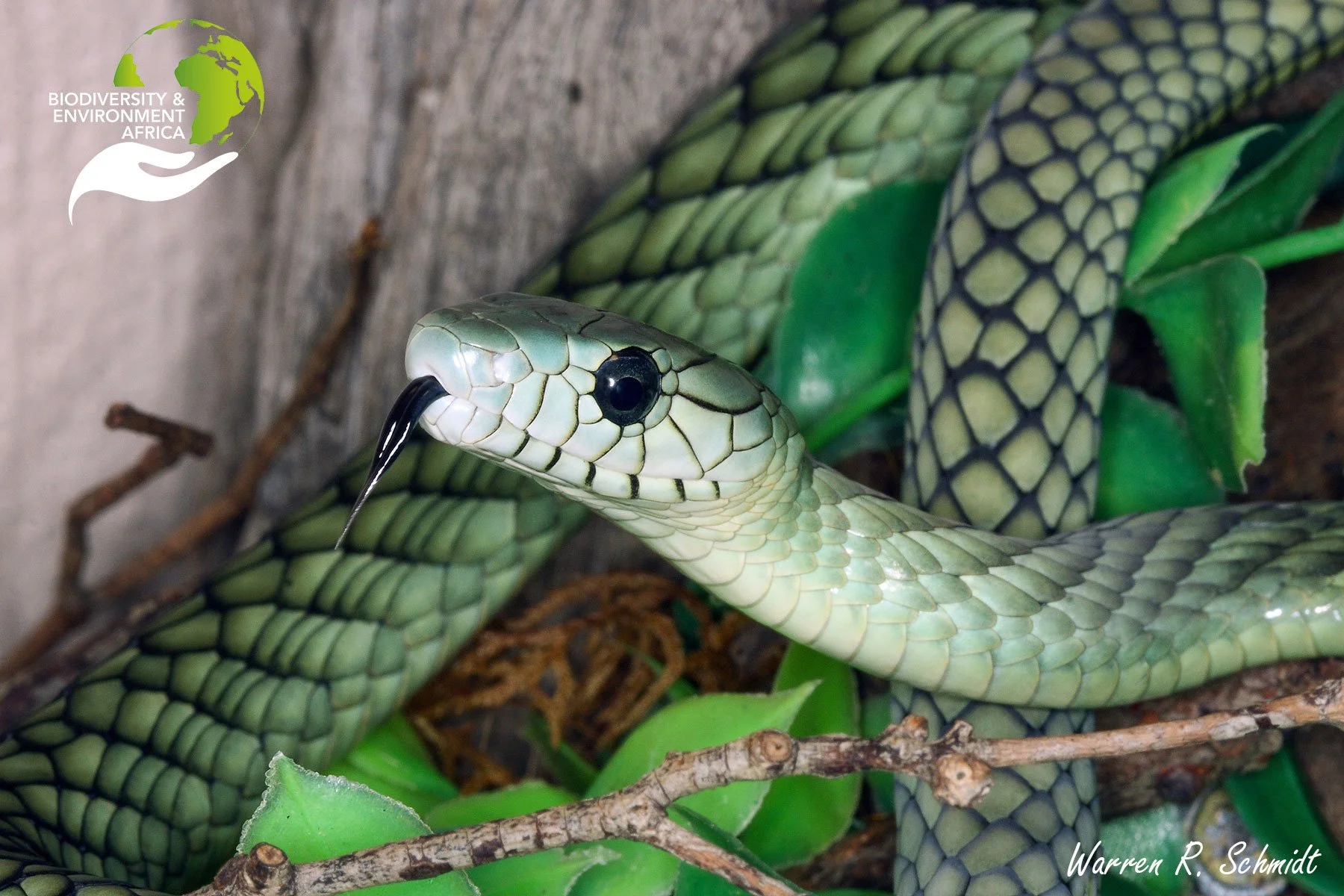
Western Green Mamba.
These are likely mistaken identities and only careful examination of museum specimens from reliable localities can clear up this confusion. There are notable differences in scalation between the two species, but almost impossible to differentiate from photographs.
Identifying mamba species by morphology and scale counts
The four mamba species, apart from coloration and to some extent distribution, can be separated on the basis of their mid-body scale counts. The black mamba has 21-25 scales, the Eastern Green mamba 17 or 19 scales; Jameson’s Mamba 15 or 17 scales and the Western Green 13 mid-body scale rows. The Western Green Mamba has unusually large dorsal scales resulting in the low number of dorsals compared to the other three species.
Mamba behaviour and habitat use in African landscapes
The Black Mamba is primarily a savanna species but will enter coastal forest and, in some areas, it is sympatric with Eastern Green Mambas. They are mostly terrestrial but will climb readily and are equally at home in trees and thickets. All mambas are active by day (diurnal), but the Black Mamba will forage into the early evening during hot summer weather. They take shelter down large burrow networks and within the hollowed-out sections under tree roots, in addition to large termite mounds. In rocky habitats they use large boulders and crevices as shelter. They are very adaptable to peri-urban built-up regions and will shelter inside rooves and outbuildings, as well as stacked building rubble and debris. Another favourite retreat are concrete retainer walls with hollowed out cavities, especially around valleys and riverbanks. Rats and rock hyraxes (dassies) form the bulk of their diet, but they will also feed on small feral and domestic cats. In peri-urban areas they are often attacked by dogs and each year many dogs succumb to Black Mamba bites.
Arboreal behaviour of green mamba species
The three Green Mambas are all very similar in behaviour by being predominantly arboreal. Most of their activity takes place high up in the canopy of trees, but they do come to the ground to hunt or nest within the root cavities of trees and shrubs. It is during these times that they may come into contact with people when seeking refuge in buildings and sheds. Snakebites from the Eastern Green Mamba is comparatively rare, but both Jameson’s and the Western Green Mamba are responsible for a significant number of bites, especially in agricultural areas in West and Central Africa. They will regularly take up residence in mango and other fruit trees where they pose some risk to people during the picking season. Many snakebites also occur when people harass, corner, or try killing these fast and agile snakes.
Defensive behaviour and risk perception of mambas
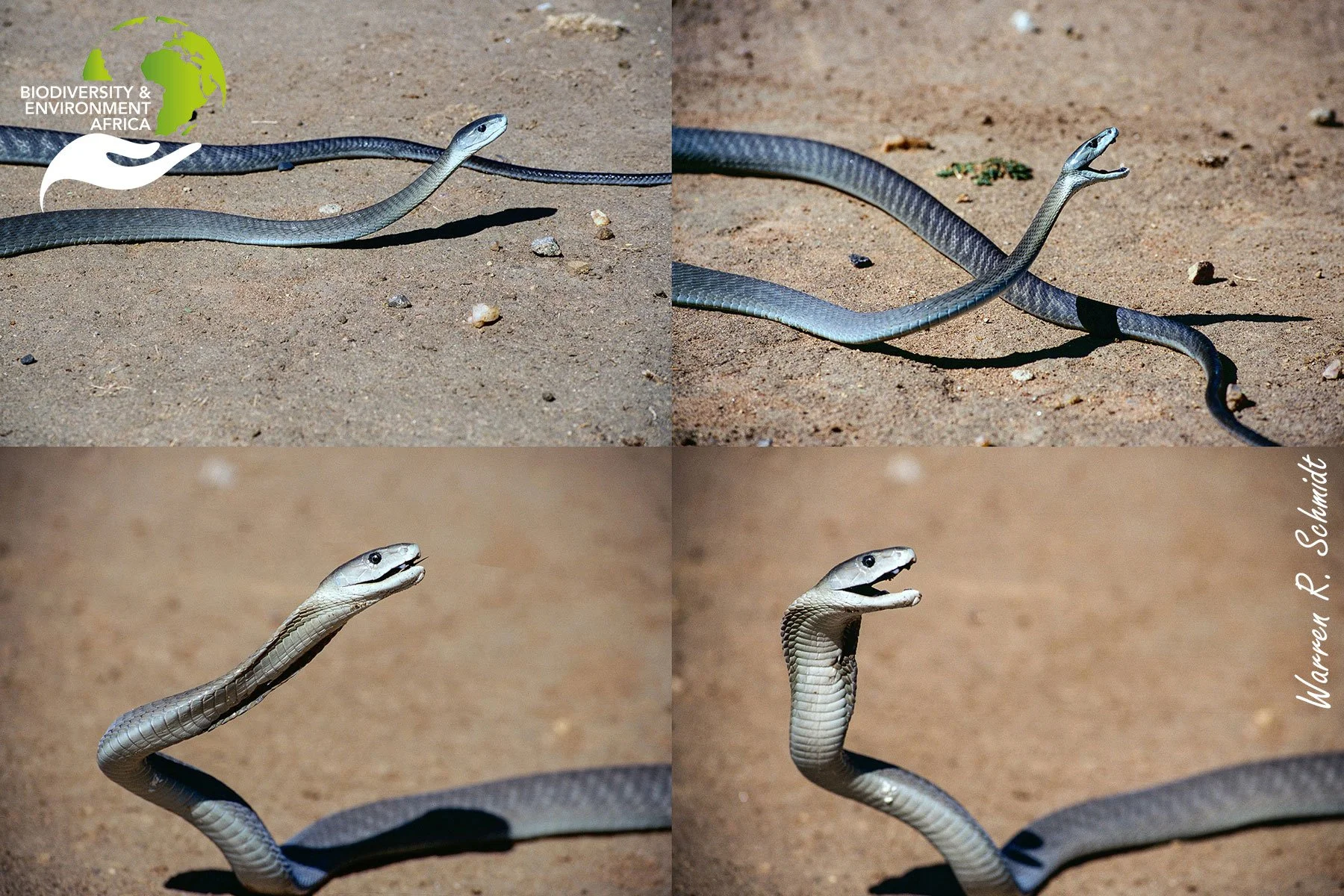
Defensive posturing of the Black Mamba.
Mambas are alert and fast moving, and given the chance, will retreat. A cornered Black Mamba presents a dangerous situation. They may coil back and raise the head and neck spreading a narrow hood, accompanied by gaping the mouth and hissing. Even at this point, if given the opportunity, they will flee, but if pursued they can strike and bite rapidly.
Snakebites
Why is mamba venom so potent?
Mambas possess a virulent neurotoxic venom which is rapidly absorbed in the body, leading to paralysis and respiratory collapse. Mambas feed on rodents and birds, both groups being fast on the wing or fleet footed. Having a venom which can immobilise their prey within seconds ensures hunting success without expending too much energy. It also reduces the risk of injury from their prey.
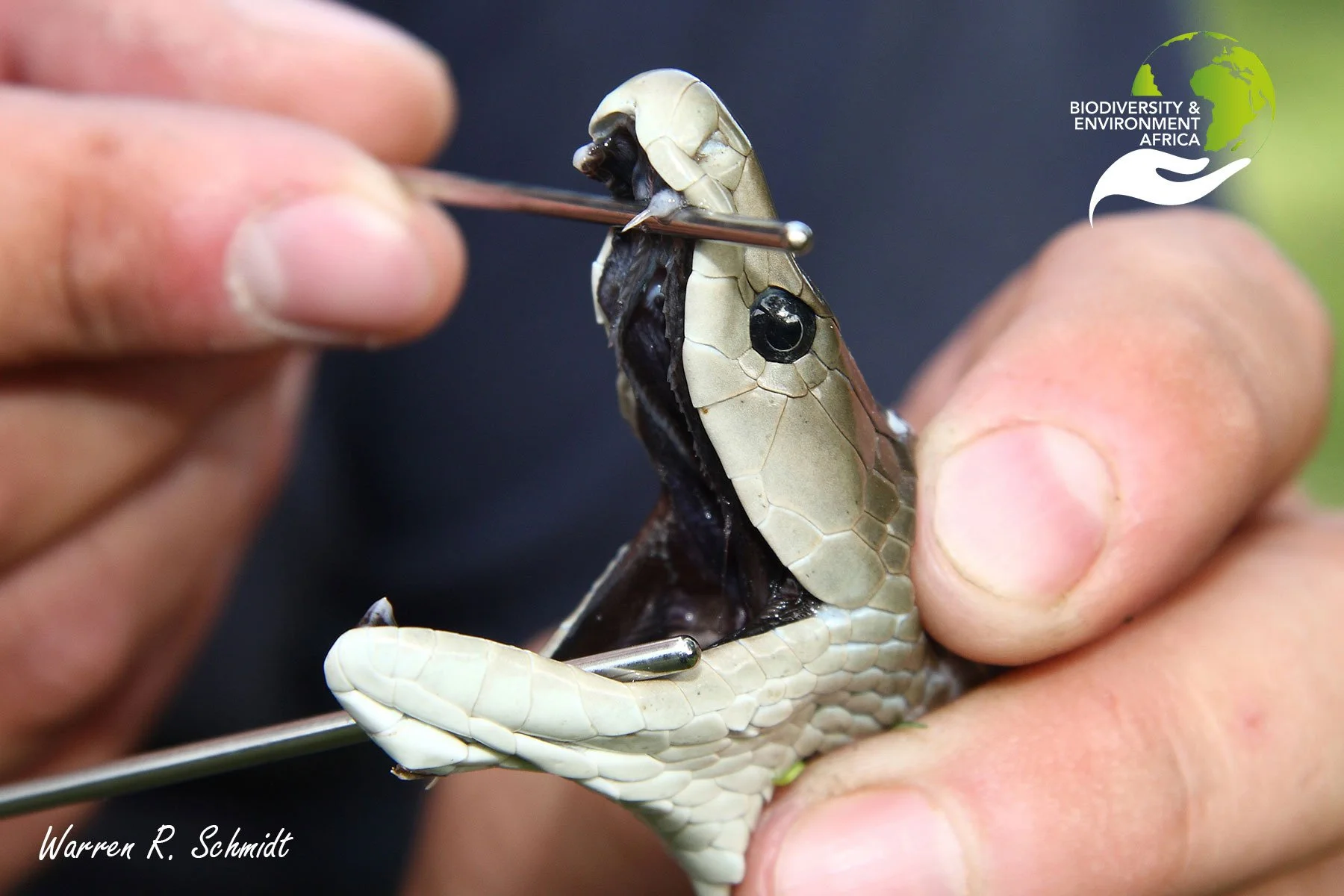
Front fixed fangs of the Black Mamba.
Mamba venom comprises a lethal cocktail of neurotoxin enzymes and proteins which block presynaptic acetylcholinesterase activity at the neuromuscular junctions. These include dendrotoxins –which block potassium channels; calciseptine and calcicludine –which block calcium channels; and fasciculins –which inhibits the activity of acetylcholinesterase. This leads to muscular paralysis.
Symptoms of mamba envenomation in humans
Black Mamba bites are often considered to be at least twice as potent as the Green Mambas, but all four species possess a fast-acting, lethal venom. Within seconds of a bite, victims experience a tingling sensation (sometimes likened to pins and needles), and often a metallic taste in their mouth. The onset of symptoms and duration of the different stages —from initial bite to respiratory collapse and unconsciousness —varies significantly between species and victims.
Progression of envenomation and factors influencing severity
This is attributed to variable factors such as the site of the bite, quantity of venom injected into the wound, absorption rate and further complications caused by anaphylaxis. Absorption rate can be influenced by physical exertion, body fat, type of tissue, part of the body bitten, and first-aid measures taken.
In rare cases, collapse is known in as little as 10-30 minutes, but in the majority of cases, respiratory paralysis sets in after an hour or more with black mamba bites, and even longer than an hour when it comes to green mamba bites.
Further advanced symptoms include nausea and vomiting, profuse sweating, muscular weakness, cramps, dizziness, diarrhoea and shortness of breath. Respiratory collapse occurs as a result of the toxins weakening, and paralysis of the diaphragm muscle, preventing movement of air into the lungs. Death occurs when the vital organs are starved of oxygen.
Treating a snakebite: medical context and emergency response
Mamba bites present a medical emergency. Dry bites are very rare, so all mamba bites must be treated with speed and precision. The victim must remain as calm and immobile as possible, although in field situations this can be difficult. Where accessible, emergency services with advanced life support and resuscitation skills must be called to the victim. A firm elastic bandage can be applied throughout the bitten limb (pressure/immobilisation treatment); however, it is challenging to achieve the correct pressure gradient to efficiently suppress lymphatic drainage. Black Mamba bites are one of the very few snakebites where the use of a tourniquet or blood pressure cuff is advocated, where medical assistance is further than one and a half hours (90 minutes) away.
Given that respiratory failure is the primary cause of death, the patient must be given assisted (mechanical) ventilation when they can no longer breathe unaided. Access to a bag-valve mask will aid greatly in this regard, as will comprehensive training in resuscitation and CPR first aid. Rapid transportation to the nearest high care medical facility is of paramount importance where resuscitation specialists and mechanical ventilators will be on hand.
Antivenom use and recovery following mamba envenomation
Infusion of sufficient antivenom is very effective in reversing the symptoms, but antivenom must be administered by a physician in a hospital setting. Between 8-20 vials (80-200 ml) may be required in serious black mamba bites.
Some comatose victims, upon recovery, have remarked that they were aware of people and sounds around them, even though they could not physically move. Recovery is usually rapid once the antivenom has neutralised the venom effects.
Medical resources on African snakebite management
The South African Snakebite Advisory Group has compiled excellent resources for the treatment of snakebites. These were published in the South African Medical Journal and can be found at the following links:
Text and Photographs: Warren Schmidt
Biodiversity & Environment Africa delivers comprehensive training across all aspects of outdoor safety, with a unique specialisation in the accurate identification of dangerous wildlife and clear visual mapping of their geographic distribution. Leveraging our extensive databases and field expertise, we formulate detailed, tailor-made Risk Assessments and Emergency Response Plans to meet the needs of any operation. To learn how we can support the safety of your teams in the African outdoors, get in touch with us today.